In Australia, IVF has become a normal and increasingly common part of family building, with around one in 18 babies now conceived through IVF treatment. If you're considering IVF for the first time, you're joining tens of thousands of Australians who turn to this treatment each year, supported by decades of research, refinement, and proven results.
Dr Mandana Master provides expert, individualised IVF care, guiding you through every stage of the process with clarity and compassion.
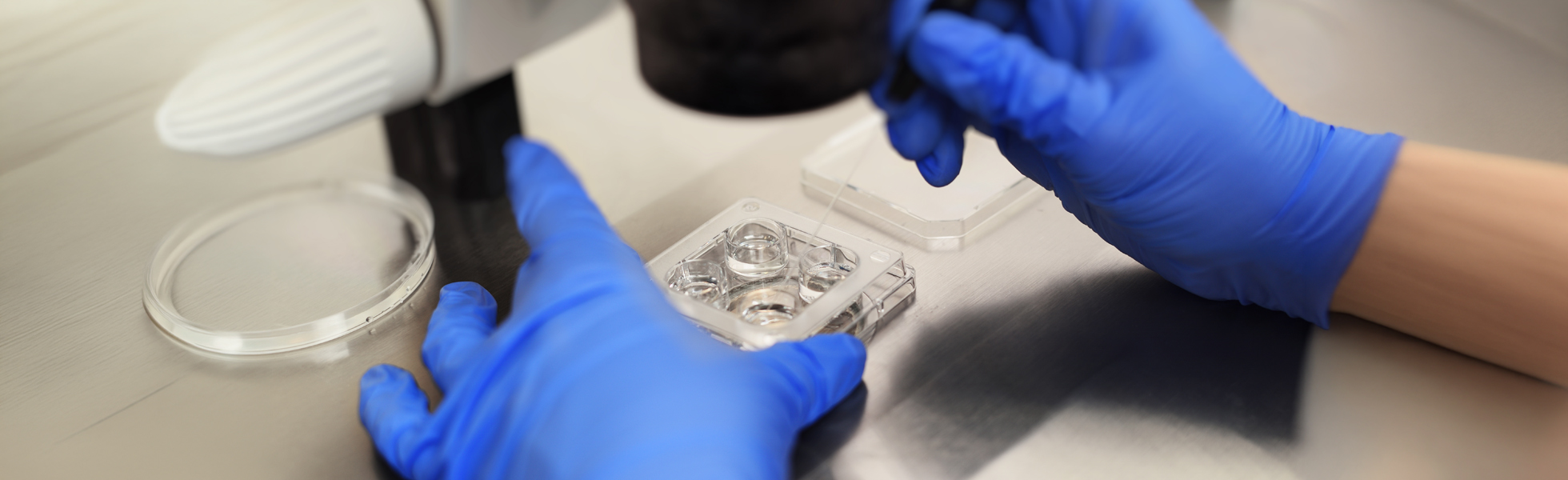
IVF is a fertility treatment in which eggs are retrieved from the ovaries and fertilised with sperm in a laboratory setting, outside the body (“in vitro” means “in glass”). The resulting embryo is then monitored for several days before being transferred into the uterus, where it can implant and develop into a pregnancy.
IVF was developed to overcome a wide range of barriers to natural conception, and remains one of the most effective and well-studied fertility treatments available today.
IVF may be recommended for individuals or couples experiencing:
IVF may also be the treatment of choice for solo parents or same-sex couples who are conceiving with the help of an egg or sperm donor.
If you’re unsure whether IVF is the right option for your circumstances, a consultation with Dr Mandana is the best place to find clarity.
While every treatment plan is tailored to the individual, a typical IVF cycle involves the following steps:
Hormone medication is used over approximately 10–14 days to stimulate the ovaries of the female partner to produce multiple eggs, rather than the single egg released in a natural cycle. Regular monitoring through blood tests and ultrasound ensures the response is safe and effective.
Once the eggs have matured, a short procedure under sedation is performed to retrieve them from the ovaries. This is a routine, well-tolerated procedure that takes around 20–30 minutes.
Retrieved eggs are fertilised with the male partner’s or a donor’s sperm in the laboratory by combining them together in a dish, allowing the sperm to swim to each egg and burrow through its outer layers on their own.
Fertilised eggs are cultured in the laboratory for several days as they develop into embryos. Embryologists monitor their growth and quality, helping identify which embryo (or embryos) are most suitable for transfer. PGT may be undertaken on the embryos at this stage.
A single embryo is typically transferred into the uterus using a thin catheter – a quick, painless procedure that doesn’t require anaesthesia. Any additional healthy embryos can be frozen for future use.
Approximately two weeks after transfer, a blood test is performed to determine whether the cycle has resulted in a pregnancy.
IVF success varies from person to person, and Dr Mandana will discuss realistic expectations based on your individual circumstances. Key factors influencing success include:
Particularly the age of the eggs used, which is the single most significant factor in IVF outcomes.
The number and quality of eggs available for retrieval.
Some conditions respond more readily to treatment than others.
Which is assessed by the laboratory team prior to transfer.
A receptive uterine environment is essential for successful implantation and healthy pregnancy.
Of the partner carrying the pregnancy, including BMI, smoking status, and alcohol use, which are ideally optimised prior to treatment.
IVF is a well-established and generally safe treatment, though as with any medical procedure, it’s important to understand the potential risks. These may include mild bloating or discomfort from ovarian stimulation, a small risk of ovarian hyperstimulation syndrome (OHSS), the possibility of multiple pregnancy (significantly reduced through single embryo transfer practices), and the emotional demands that can come with fertility treatment. Dr Mandana will discuss all relevant risks with you clearly, ensuring you feel fully informed and supported at every stage.
If you need specialist advice and care for achieving your family building goals, you’ve come to the right place. Get in touch with Dr Mandana Master at Embrace Fertility today.